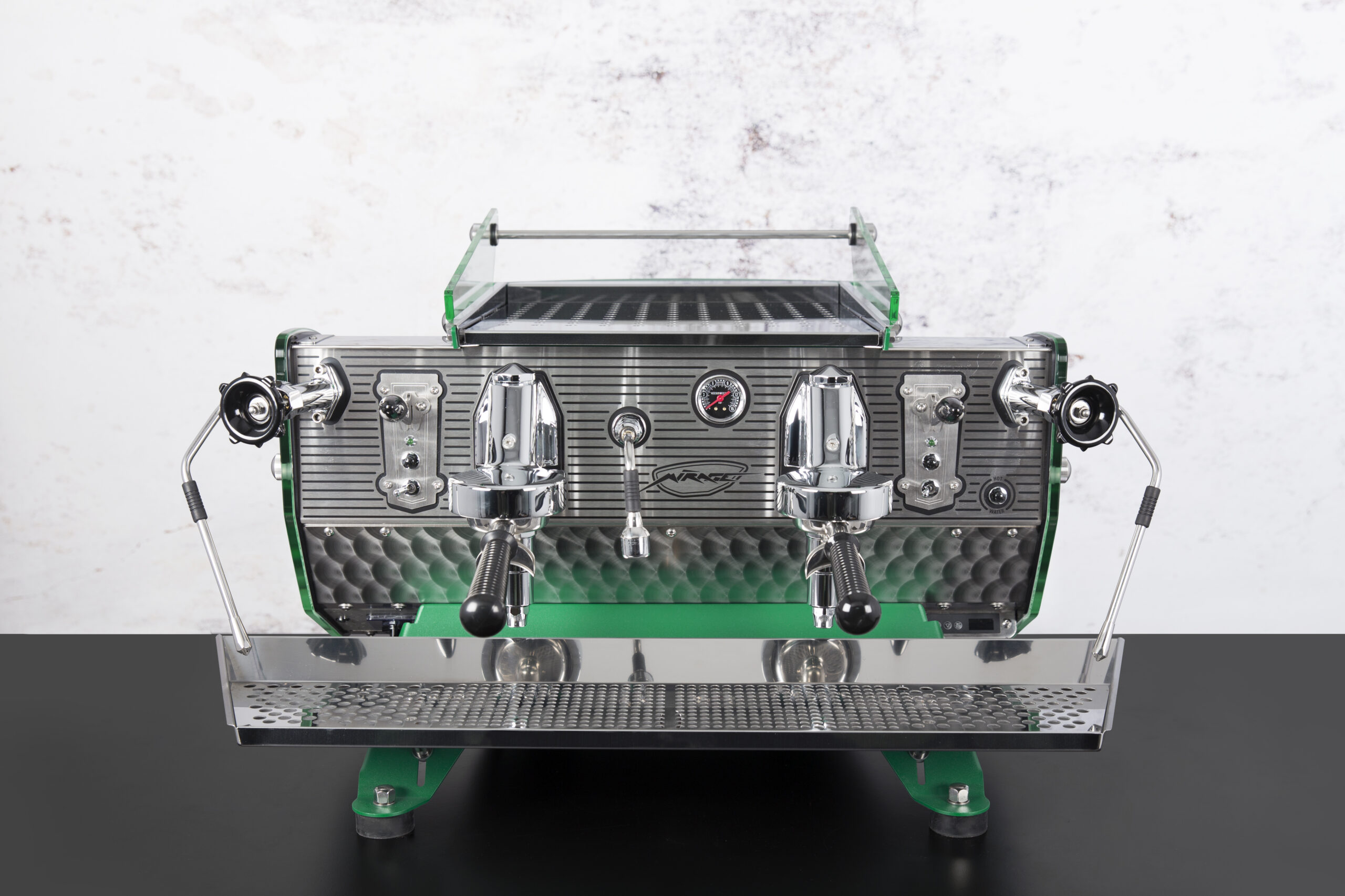
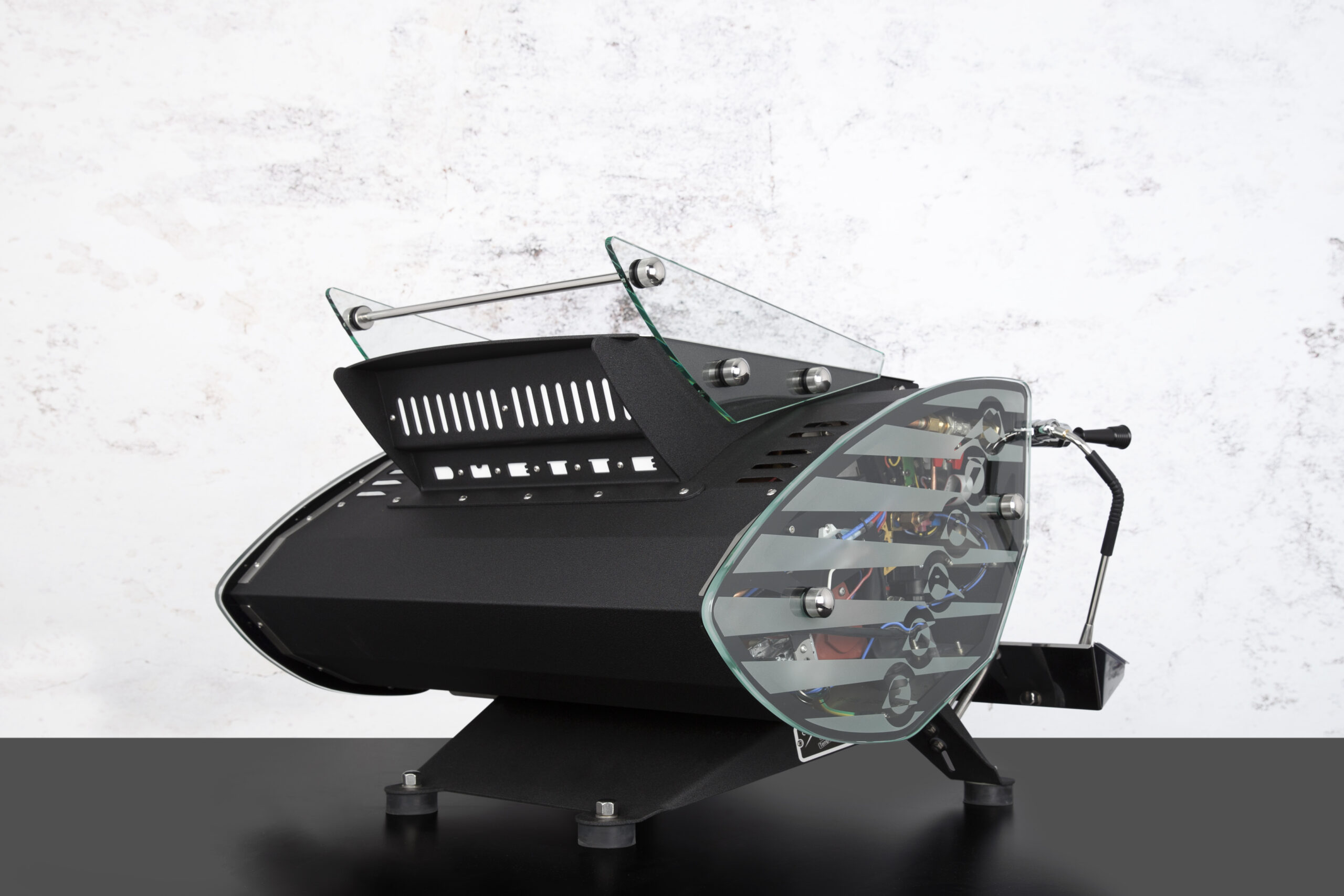
The challenge of the thermo-syphon system lies in delivering brew water at a stable temperature in the low 90s°C, even though it comes from a heat exchanger (HX) storing water at around 125°C. This high temperature is necessary to keep the group head at the ideal brewing temperature, while the water itself must be cooled slightly before reaching the coffee. The brewing process begins when the group solenoid valve opens, allowing water from the thermo-syphon loop to flow toward the coffee in the portafilter. Simultaneously, the pump activates, ensuring a steady 9-bar pressure from pump to coffee.
As soon as the solenoid valve opens, the flow in the lower thermo-syphon tube reverses direction—now moving upward to the group instead of downward to the HX. The upper tube’s flow continues as before. This is where the restrictor plays a vital role. With a 1.5mm orifice in the upper tube, its flow is heavily limited. The lower tube, however, has a much wider 8mm diameter and no restrictor, so about 99% of the brew water reaches the group through this lower path.
This is ideal, since the lower tube contains cooler water (around 88–92°C) compared to the upper tube (115–125°C). In the Mirage, we optimize this further by making the lower tube extralong, holding 30cc of water. Some remaining water still comes directly from the HX, which is constantly refreshed with cold water entering from the bottom. As hot water exits the HX through the lower outlet, incoming cold water flows alongside it through a narrow copper tube. This crossflow effect helps cool the hot water and pre-warm the incoming cold water. The fresh cold water is then forced to the top of the HX via an injection tube, and during brewing it travels back down to be reheated—ensuring efficient use of the HX’s heat.
Though this cooling process also depends on factors like climate and season, it reliably reduces water temperature well below 100°C. As the water travels through the long lower tube, its temperature stabilizes further. Finally, it enters the large 4kg brass group, where the thermal mass helps regulate temperature perfectly.
To improve this, the internal design of the group maximizes water contact with the brass. Water first flows into a 35cc rear chamber, then to the solenoid, then back into the group, filling the infusion chamber, and finally passes through the dispersion screen.
Thanks to the group’s thermal stability, even after boiler refills, many shots can be pulled at the correct temperature. For best results, a short flush (30–45cc) is recommended before brewing. Avoid longer flushes, as they destabilize the system, requiring up to five minutes to recover.